
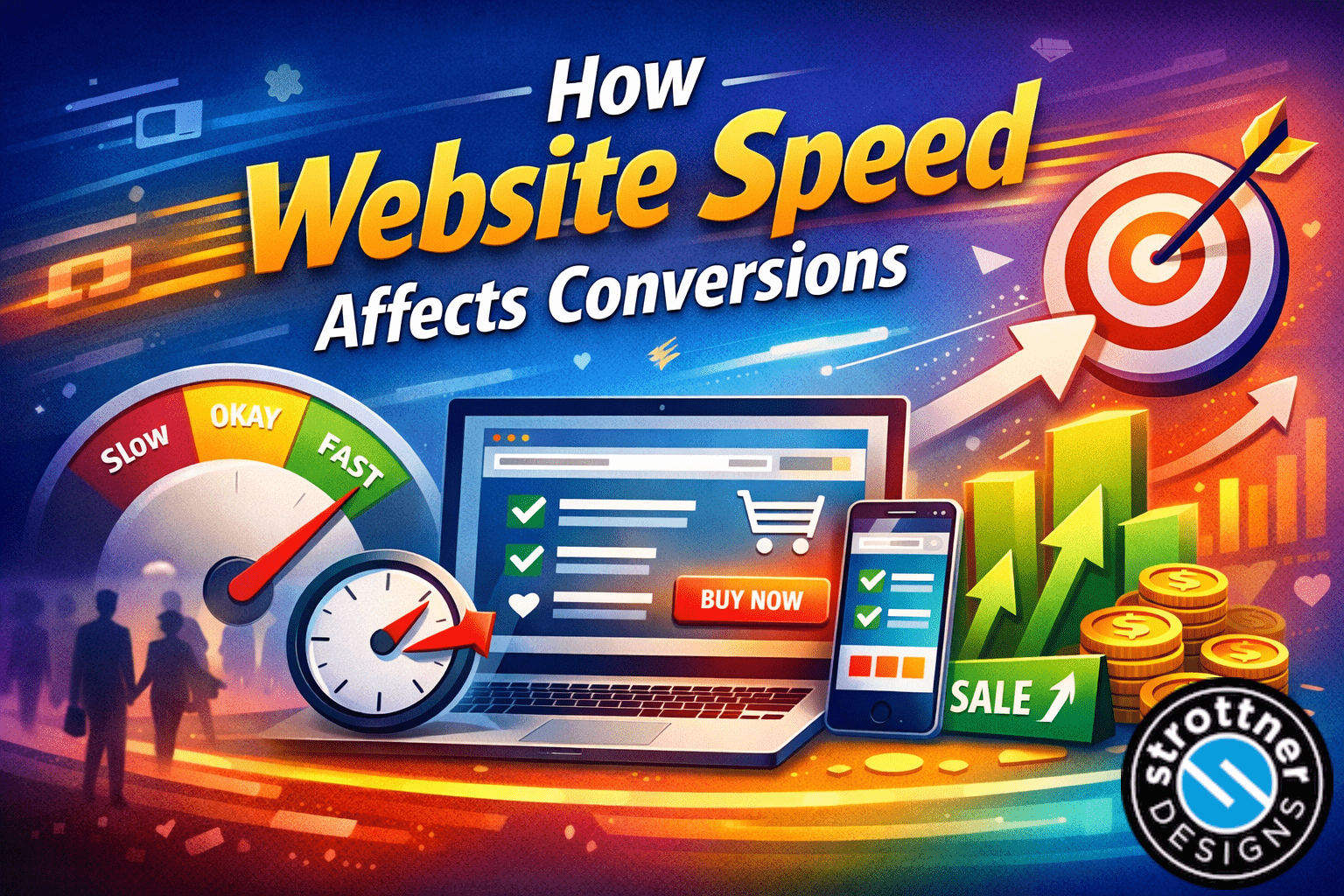
Most people don’t actively think about website speed. They feel it. When a page loads fast, everything just works. When it doesn’t, people leave. That’s the simplest way to understand how website speed affects conversions.
Speed sets the tone the second someone lands on your site. Slow pages create friction and doubt. Fast pages feel smooth and trustworthy. Even small delays can push visitors away before they read a headline or click a button.
When your site loads quickly, UX feels better without you changing a thing. Pages are easier to use, content is easier to scan, and taking action feels effortless. That’s why faster sites tend to rank better, keep people longer, and turn more visits into real leads or sales.
People have very little patience for slow websites. Even short delays feel longer than they are. Akamai found that more than half of mobile users abandon a page if it takes longer than three seconds to load. That means many potential customers never even see your message.
Speed directly affects conversion rates. Propellernet’s research shows that visitors who experience faster-than-average load times are 34% more likely to convert than those on slower pages. Speed isn’t a technical nice-to-have, it’s a core part of the user experience.
Speed also affects SEO. Google’s Page Experience update uses Core Web Vitals, loading speed, interactivity, and visual stability, as ranking factors. Faster, more stable sites tend to rank higher, which brings in more organic traffic. When that traffic lands on a site that feels easy and responsive, conversions improve. Cloudflare sums it up well: page speed has a “large, measurable effect on conversion rates.” Even small gains matter. On a $10M-per-year ecommerce site, a 4% conversion lift from speed improvements can mean an extra $400,000 in revenue.
Speed is only one part of UX. A strong user experience means visitors can quickly find what they need, understand what you offer, and know what to do next, on any device.
Good UX comes down to clarity and ease. Clear navigation, readable content, obvious buttons, and mobile-friendly layouts reduce friction. When UX is poor, confusing layouts, slow interactions, missing or hard-to-find actions, visitors get frustrated and leave. When UX is strong, the site quietly guides people toward conversion.
UX has a major impact on results. Well-executed UX design can increase conversion rates by up to 400%. That doesn’t mean adding flashy visuals. It means removing obstacles: simplifying forms, tightening layouts, and focusing attention on the primary action.
For example, a law firm site that clearly displays its phone number and “Free Consultation” buttons performs better than one that hides them. Visitors shouldn’t have to search for the next step.
Key UX elements that drive conversions include:
When these elements are in place, conversion rates rise. Traffic alone doesn’t create results, the experience determines what happens after someone arrives. Nielsen Norman Group puts it simply: conversion rates are “greatly impacted by the design.” Speed and UX work together. A fast site is part of UX, and good UX makes that speed count.
Optimized speed and UX don’t just help users. They also help search visibility. Google rewards sites that load quickly and keep visitors engaged. Better rankings lead to more impressions and clicks, which bring in more potential customers.
This is something we see consistently in client work at Strottner Designs. When we rebuild sites with speed, UX, and technical SEO in mind, rankings and traffic typically follow.
For example, Vista Dermatology’s redesigned site now ranks for 1,858 organic keywords, with 131 on Google’s first page. The site earns roughly 4,500 monthly clicks and over 144,000 impressions. Thirty-seven keywords hold the #1 position. That level of visibility allows a growing practice to compete in a crowded market.
A San Antonio defense attorney saw similar results. After a speed-focused rebuild, quarterly traffic increased 24% and impressions jumped 439%. They now rank for 57 competitive terms across multiple Texas cities, dramatically expanding their reach.
Other medical clients like Orthopedic Performance Institute averaged over 2,700 monthly clicks and 128,000 impressions, with 38 keywords ranking #1. That’s steady, ongoing visibility from people actively searching for care.
Even niche businesses benefit. MK Golf Technologies now ranks for 443 keywords and earns consistent local traffic after a fast, modern redesign. More visibility led to more qualified visitors — and more business.
These examples show the chain reaction clearly: faster load times and better UX improve engagement, which helps SEO, which brings more traffic, which converts better because the experience is strong.
Improving speed and UX leads to measurable growth. Conversion rates often rise quickly once friction is removed. Forrester’s research isn’t theoretical, it reflects what happens when sites are designed to work for real users.
The best approach is holistic: optimize speed, refine UX, and support it all with solid SEO. Focus on faster load times, mobile-first design, clear messaging, and obvious next steps. Test Core Web Vitals. Watch user behavior. Fix what slows people down.
Your website is part of your customer service. If it’s slow or confusing, visitors treat it the same way they would any poor experience.
If you want help improving performance, Strottner Designs specializes in building fast, user-friendly websites that convert…and in some cases, we build them for free! Higher rankings, more traffic, and better results usually come from making the site work better, not making it louder.
Take Action: Don’t lose customers to a slow or frustrating site. Contact Strottner Designs to schedule a consultation. We’ll audit your site’s speed and UX and create a clear plan to improve conversions.

Interested in a new site and SEO, or just a new site? Visit Home of the Free Website to learn how we can build you a free or affordable site.

Privacy Policy | Sitemap | Terms of Use