When we talk to clients at Strottner Designs, we hear the same questions over and over:
“How do I rank higher on Google?”
“Why aren’t people converting on my website?”
“What’s a bounce rate—and should I care?”
Let’s tackle that last one. Yes, you should care. In fact, you should probably care more than you do. Bounce rate is one of the most misunderstood—and underrated—metrics when it comes to SEO.
And in today’s blog post, we’re breaking down exactly how bounce rate quietly affects your SEO success, why it’s not just a “vanity metric,” and what you can do to fix it.
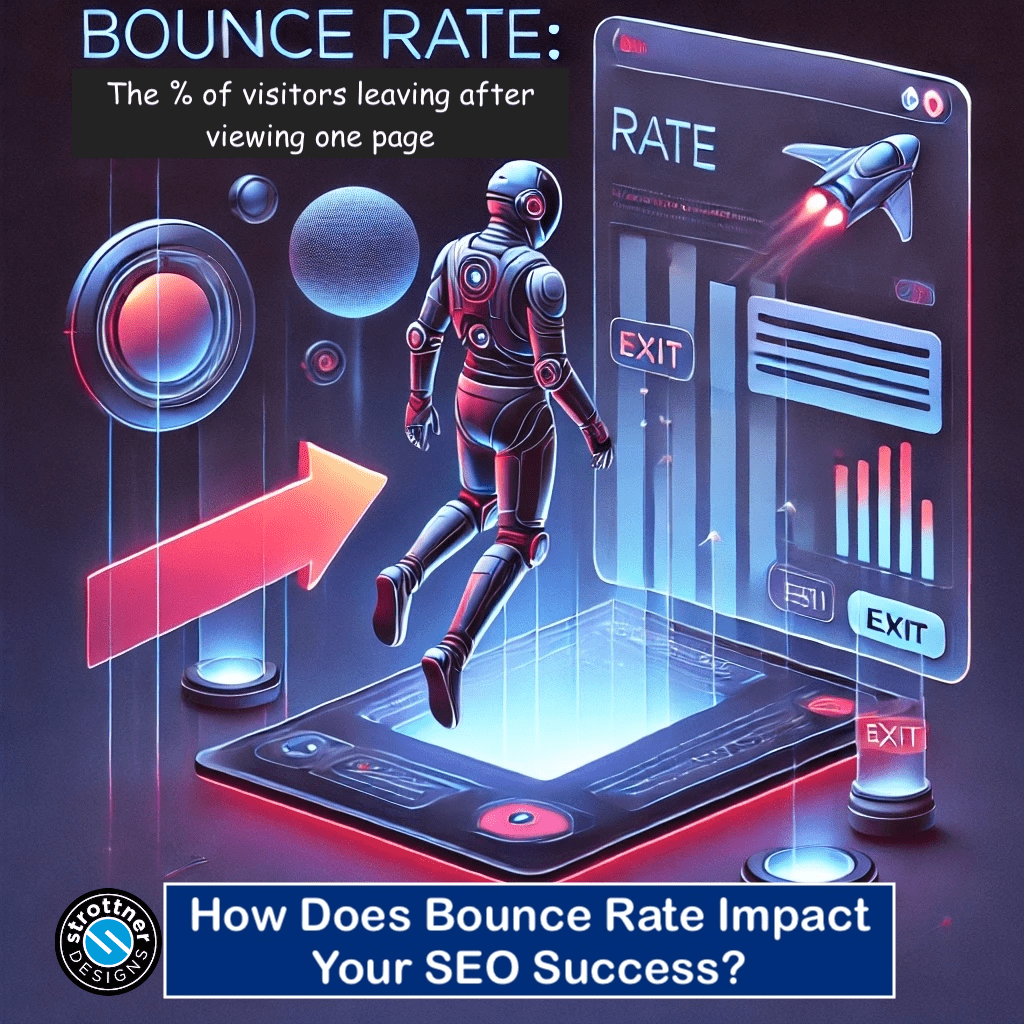
As previously discussed, bounce rate is the percentage of people who land on a page of your website and leave without clicking anything else. They don’t visit a second page. They don’t fill out a form. They don’t click your CTA. They bounce.
In Google’s eyes, that bounce could mean one of two things:
The user found what they needed immediately (good bounce).
The user didn’t find your page helpful, relevant, or interesting (bad bounce).
The problem? Google can’t always tell the difference. But if your site has a consistently high bounce rate and low dwell time (how long people stay on the page), it sends a strong signal: “This content isn’t engaging or relevant.” That can crush your SEO rankings over time.
Technically, Google has claimed bounce rate is not a direct ranking factor. But in the real world? User behavior metrics are absolutely part of the picture.
Here’s why:
Google tracks engagement via Chrome, Android, and Search Console.
If users leave your site quickly and don’t return, that tells Google your content didn’t satisfy them.
Search engines want to give users what they want. High bounce rate = users didn’t get what they wanted.
Bottom line: Google may not use bounce rate as a direct lever, but they use the signals it creates.
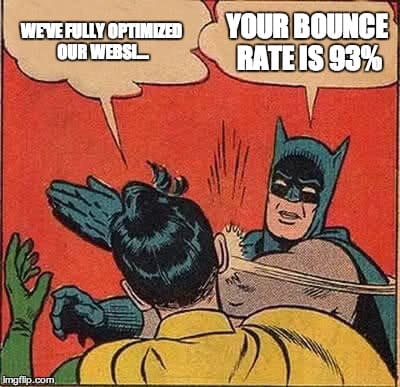
Let’s get specific. If you’ve got a high bounce rate, here’s what it could actually be doing to your business:
Lower rankings over time as Google determines your site doesn’t satisfy user intent.
Lost leads and sales because users aren’t sticking around to take action.
Wasted ad spend when you’re paying to send traffic to a page that doesn’t convert.
Weaker credibility and brand trust when people show up, see a mess, and leave instantly.
Translation: A bad bounce rate isn’t just a number in your analytics dashboard. It’s a leaking funnel, a lost sale, a broken experience.
At Strottner Designs, we see certain bounce-rate killers come up again and again. Here are the top culprits:
Users will bounce if your site takes more than 2–3 seconds to load. Period. This is a double-whammy: slow sites hurt both SEO and UX.
When a visitor lands on your site, they should know exactly who you are, what you do, and how you help them—in the first 5 seconds. If you miss that window, they’re gone.
Ugly, cluttered, or unresponsive pages send users running. Over 60% of traffic is mobile. If your site isn’t mobile-first, you’re losing half your audience.
Ranking for the wrong keywords can backfire. If your page promises one thing in the search result and delivers something else, people won’t stick around.
What do you want users to do? If it’s not obvious, they won’t do anything. They’ll click the back button and forget you existed.
Ready for the good news? Bounce rate isn’t a life sentence. You can turn it around—and when you do, your SEO performance will thank you. Here’s how:
Compress images. Use proper caching. Minimize scripts. At Strottner Designs, we bake page speed into every WordPress build—because without speed, nothing else matters.
Think like your user. Are they looking to buy? Learn? Compare? Make sure your content actually serves the intent behind the search query.
A clean, modern, conversion-focused design keeps users engaged. That’s our specialty. We build WordPress sites that don’t just look good—they perform.
Give users somewhere to go. Suggest related posts. Add “Read more” links. Guide them through your site so they don’t dead-end on the first page.
Tell people what to do next: call you, book a consult, download a guide, watch a demo. Don’t make them guess.
Let’s recap: Bounce rate might not be a direct ranking factor, but its impact on SEO is real. A high bounce rate can drag your rankings down by signaling poor relevance and weak engagement. And when your rankings drop, so does your traffic, your leads, and your revenue.
The fix? Design smarter. Write better. Load faster. And always, always keep the user journey in mind.
At Strottner Designs, we specialize in building WordPress websites and SEO strategies that don’t just look good—they work hard. If your bounce rate is sky-high and your rankings are sinking, we can help you bounce back. Contact us today to learn more about our free website program or run an audit using the free tool found on every page of our site!



Privacy Policy | Sitemap | Terms of Use